Mid Row Banding

Share this article

This is a subtitle for your new post

Mid-row Banding in a Post Rice Crop


The mid-row banding project has been running in the local area since 2015 on researcher Leigh Vial's property, North Dale. This property is situated 40km from Moulamein NSW and 33km from Swan Hill VIC.
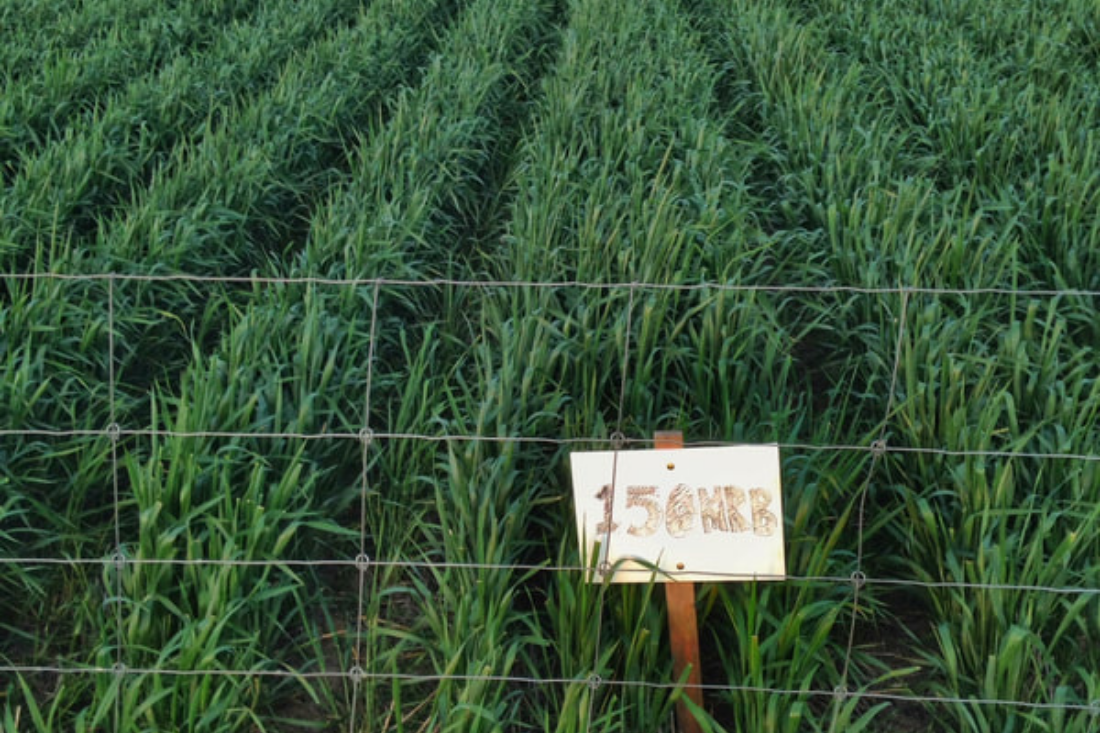
Leigh saw the need for better nitrogen management within his rice stubbles. In his experience, the moderately sodic clay soils on his property were able to retain moisture post flooding in a rice crop, minimising the need for irrigation the following season. However, crops grown in rice stubble are always nutrient poor and suffer waterlogging during the growing season. As a result copious amounts of nitrogen are applied to these crops, with much of it being lost from the system.
Leigh decided to trial mid-row banding his nitrogen to slow the conversion of Urea into plant-available nitrate. In theory, the high concentration of nitrogen should inhibit microbial activity on the fertiliser until later in the season. The longer that fertiliser is in an ammonium state, the less likely it is to be lost via leaching or waterlogging. If successful, this should result in lower crop nitrogen requirements, labour and increased yield potential.

In 2015 Leigh enlisted the help of our Project Officer, Laura Kaylock to create a trial protocol and take in-crop samples to measure crop uptake of banded nitrogen. The first year produced promising results, with strongly visual differences in crop growth between different banding concentrations. Apparent nitrogen use efficiency was around 19-30% and high grain protein suggested that potential yield was not obtained due to a dry finish.
Using a SPAD chlorophyll meter (N Tester), a nitrogen uptake graph was created. This showed that plants did not begin to access the bands until 10 weeks after sowing and were accessing banded nitrogen after flowering.
Last year the trial experienced prolonged periods of waterlogging, which slowed the uptake of banded nitrogen until 13 weeks after sowing. Again, nitrogen was still being accessed until after flowering but not to the extent of 2015. Nitrogen use efficiency reached 10-17%.

In 2017 the mid-row banding trial received funding from the Murray Local Land Services through the Australian Government's National Landcare Programme, the Grains Research and Development Corporation (GRDC) and Murray Irrigation Limited. Through this funding, the services of the Centre for Regional and Rural Futures, Deakin were obtained to provide and analyse soil moisture content and drone images. 

The 2017 trial was conducted in a rice bay that was cropped with a 5 t/ha barley crop in 2016, but not pre-watered. Wheat was sown on the 16th of May at 85 kg/ha to a depth of 3-5 cm, with 150 kg/ha MAP + 1.0% Zn. A Bettinson disc drill with 18 cm row spacings was used. Every third row was blocked to seed and MAP, and only urea was placed in this row (at about 7 cm depth) for the 104N MRB and 150N MRB treatments. No fertiliser was placed in the mid-row band for the other treatments.
The early topdressing treatment was applied at GS31 on the 28th of July, immediately prior to the waterlogging treatments were applied on the 29th of July. The late topdressing treatment was applied between GS32-33 on the 16th of August prior to a small rainfall event.

Yields of all treatments were modest, driven primarily by a small number of grains per head. This is not surprising, as neither the dry nor wet irrigation treatments had ideal conditions. The dry treatment would have suffered from substantial water stress by the first irrigation on September 19th as the field was not pre-irrigated. The wet treatment was exposed to 10 days’ inundation beginning July 29th.

Midrow banding preserved much of the N as ammonium until 91 days after sowing (DAS), successfully preserving the N from a waterlogging event. Only 5-8% of the mid-row N was in the mid-row by 131 DAS, just after flowering. When waterlogged, mid-row banded N achieved similar grain yield, grain N and ANRE as topdressing after the waterlogging event, but less than a particularly efficient topdressing before the water-logging event. When dry, the treatment effect was the same. Both topdressed treatments had similar or better ANRE than MRB, the early topdressing probably due to the topdressed N remaining in the ammonium form and surviving the waterlogging event. 
Mid-row banding of N showed an acceptable response in both waterlogged and non-waterlogged conditions, but similar or less than highly effective N topdressing treatments.

Funding for this trial has been continued for the 2018 season by the GRDC. Three sites across the Moulamein district will be used to assess the impact of different irrigation practices on the nitrogen use efficiency of mid-row banding at sowing. 
​
For more information, contact Laura: laura.kaylock@wmlig.org.au

Recent Projects

October 8, 2026
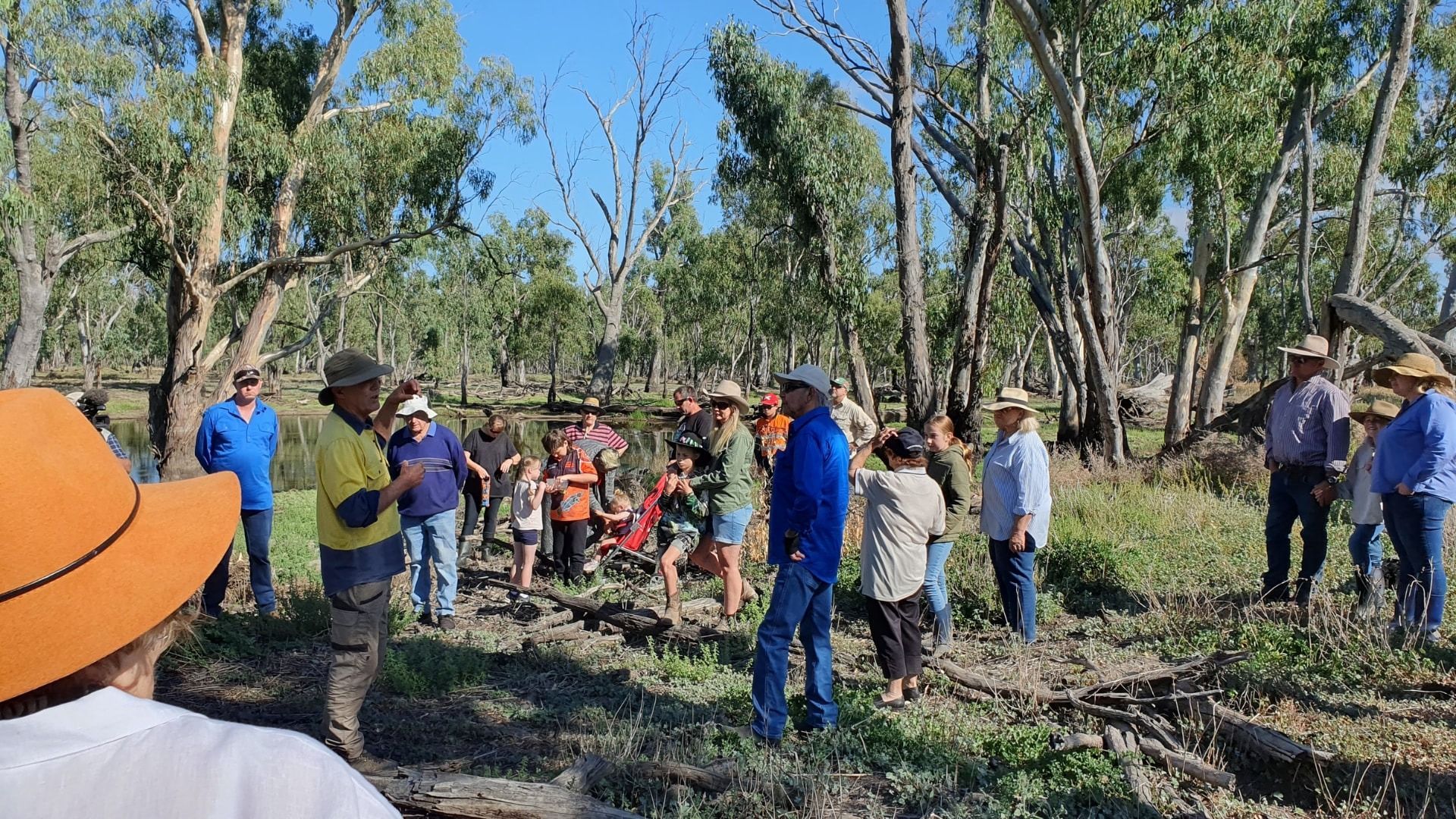
 On the 24th of October 2020, Western Murray Land Improvement Group along with Barham Landcare, held a fun and interactive workshop involving local Primary School children at Federation Reserve in Barham NSW. Two primary school classes from Barham Public School attended the workshop that saw Kindergarten on their very first out of school excursion. They were buddied up with Grade 3/4 and accompanied by 6 teachers and assistants from the school- making the total number of attendees 47. The workshop was facilitated by Barham Landcare volunteer and group treasurer Christine Dartnell and Local Landcare Coordinator (hosted by WMLIG) Stacey Waylen.
October 8, 2026
A summary of the day.
By Donna Marateo • October 8, 2026
A summary of the day.
October 8, 2026
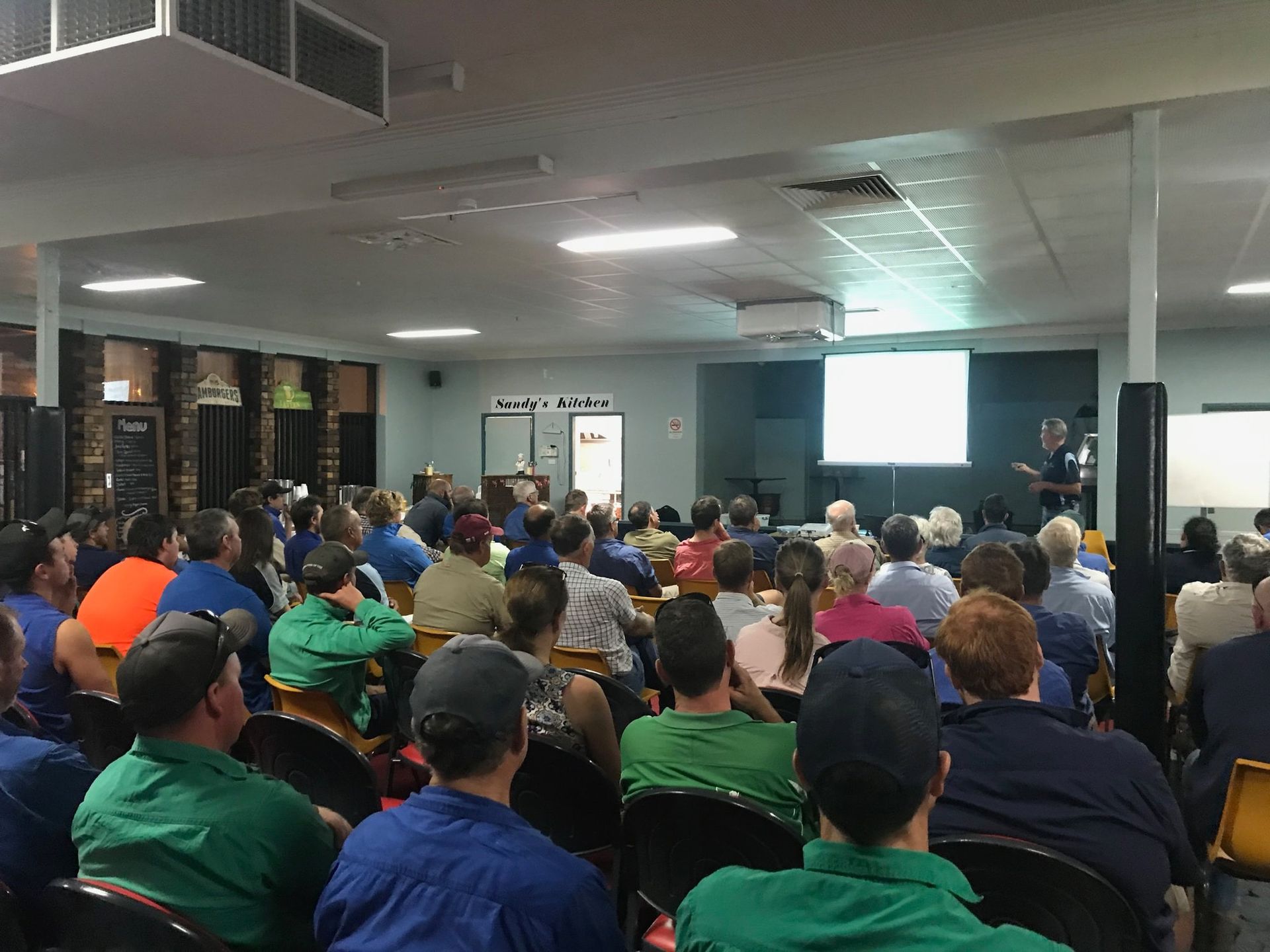
On the 31st of January 2020, over 120 local farmers and agricultural experts attended a Feedlot Information Day held in Wakool. The crowd was a diverse geographical mix, with attendees from Lalbert, Piangil, Moulamein, Barham, Deniliquin and Wakool. As following with the 'young farmer' focus of the event, the majority (42%) of attendees were under 35, while 28% were 35-45 and 37% were 45+. The day began with a workshop at the Wakool Club focused on livestock feedlot considerations. Presenter Geoff Duddy from Sheep Solutions discussed the pro's and con's of feedlotting versus containment feeding, the cost of feed and comparison of different systems. He emphasized the importance of feeding sheep protein to build muscle, wool and encourage growth. The group finished off with an understanding of how feedlots interacted with the whole farm system. Following this presentation, district vet Linda Searle (Murray Local Land Services), educated attendees on the range of livestock diseases or health complications associated with feedlot production systems.
October 2, 2026
Want to keep up to date?
October 2, 2026
World Wetlands Day 2023
October 2, 2026
​Blackwater events cause mass fish deaths across the Murray-Darling Basin
By John Reynold Tubay • September 29, 2026
In March 2020, we organised and coordinated a tour for local producers of the Griffith, Whitton and Coleambally areas, in the north-western region of the Riverina region of New South Wales. ​ Whilst it was a challenge in COVID-regulation times, our organisers, Stacey and Amy, did a great job in selecting a line-up of some of the most impressive and inspiring businesses that have successfully innovated existing product or created new products utilising spare capacity. ​ Many of the businesses that the group visited looked at value-adding options, supply chain innovation, collaboration and diversification opportunities.
By John Reynold Tubay • September 29, 2026
Key facts